



DNA/RNA Synthesis
RNA synthesis, which is also called DNA transcription, is a highly selective process. Transcription by RNA polymerase II extends beyond RNA synthesis, towards a more active role in mRNA maturation, surveillance and export to the cytoplasm.
Single-strand breaks are repaired by DNA ligase using the complementary strand of the double helix as a template, with DNA ligase creating the final phosphodiester bond to fully repair the DNA.DNA ligases discriminate against substrates containing RNA strands or mismatched base pairs at positions near the ends of the nickedDNA. Bleomycin (BLM) exerts its genotoxicity by generating free radicals, whichattack C-4′ in the deoxyribose backbone of DNA, leading to opening of the ribose ring and strand breakage; it is an S-independentradiomimetic agent that causes double-strand breaks in DNA.
First strand cDNA is synthesized using random hexamer primers and M-MuLV Reverse Transcriptase (RNase H). Second strand cDNA synthesis is subsequently performed using DNA Polymerase I and RNase H. The remaining overhangs are converted into blunt ends using exonuclease/polymerase activity. After adenylation of the 3′ ends of DNA fragments, NEBNext Adaptor with hairpin loop structure is ligated to prepare the samples for hybridization. Cell cycle and DNA replication are the top two pathways regulated by BET bromodomain inhibition. Cycloheximide blocks the translation of mRNA to protein.
DNA/RNA Synthesis Isoform Specific Products
All Product Categories
-
DNA/RNA Synthesis Inhibitors
(1447)
View all products
-
DNA/RNA Synthesis Agonists
(11)
View all products
-
DNA/RNA Synthesis Antagonists
(2)
View all products
-
DNA/RNA Synthesis Activators
(52)
View all products
-
DNA/RNA Synthesis Modulators
(34)
View all products
-
DNA/RNA Synthesis Chemicals
(20)
View all products
-
DNA/RNA Synthesis Inducers
(15)
View all products
-
DNA/RNA Synthesis Degraders
(5)
View all products
-
DNA/RNA Synthesis Controls
(5)
View all products
-
DNA/RNA Synthesis Substrates
(6)
View all products
-
DNA/RNA Synthesis Ligands
(5)
View all products
-
DNA/RNA Synthesis Related Products (2894)
Related Products (2894)

-
Antibodies (248)
-
DNA/RNA Synthesis Isoform Comparison
-
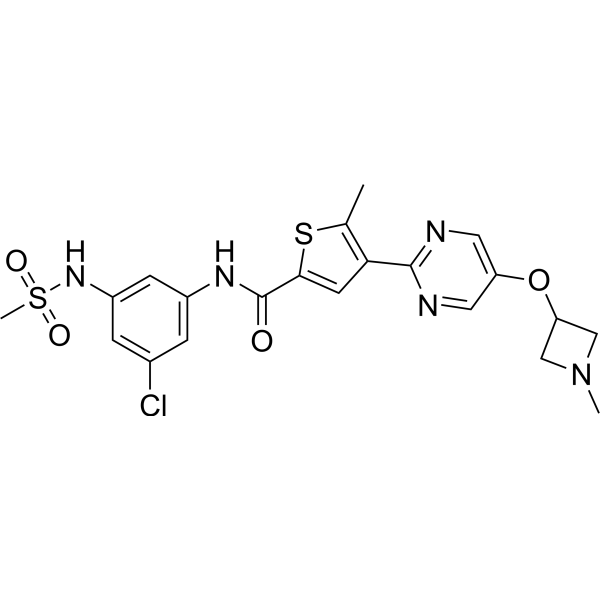
GSK4418959 (enantiomer)
 0 ImagesCat. No.: HY-169422ACAS No.: 3064599-37-4Synonyms: IDE275 (enantiomer)GSK4418959 enantiomer is an enantiomer of GSK4418959 (HY-169422). GSK4418959 (IDE275) is a non-covalent, reversible, selective and orally active WRN helicase inhibitor. GSK4418959 inhibits ATPase and DNA unwinding functions in an ATP-competitive manner. GSK4418959 can be used for the study of microsatellite instability-high (MSI-H) cancer.
-
WS-384
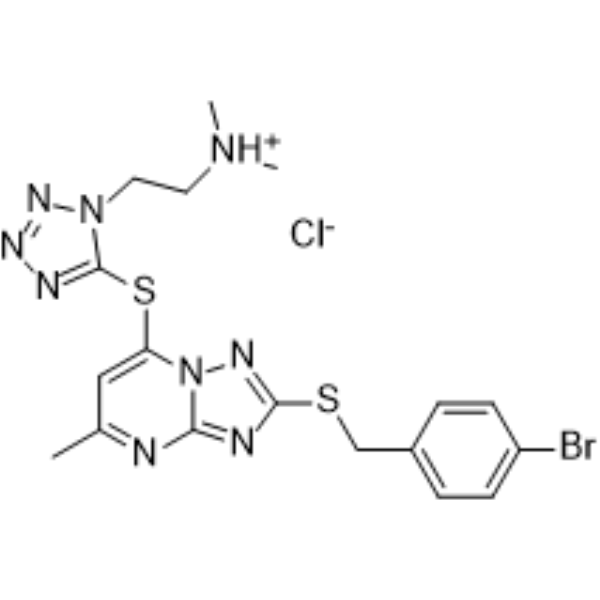 0 ImagesWS-384 is a dual LSD1 and DCN1-UBC12 protein-protein interaction inhibitor with oral activity, with IC50 values of 338.79 nM and 14.81 nM, respectively. WS-384 possesses anticancer activity and can cause cell cycle arrest, DNA damage, and induce apoptosis. WS-384 can be used in the research of non-small cell lung cancer (NSCLC).
-
5-Iminodaunorubicin hydrochloride
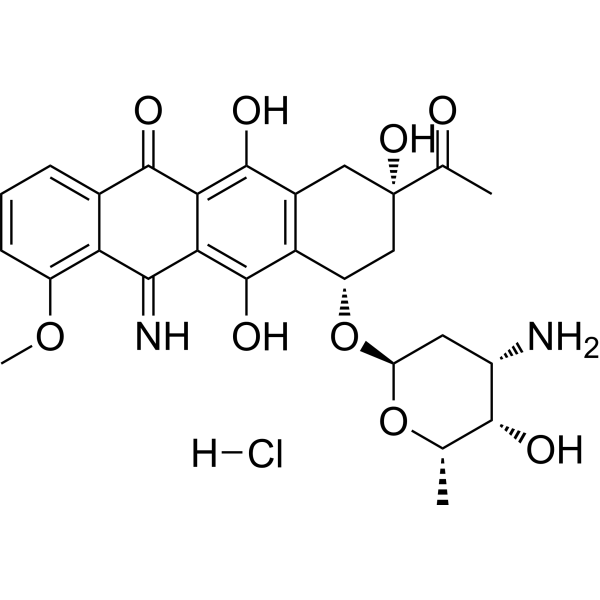 0 ImagesCat. No.: HY-138645ACAS No.: 67324-99-65-Iminodaunorubicin hydrochloride is a quinone-modified anthracycline that retains antitumor activity. 5-Iminodaunorubicin hydrochloride produces protein-concealed DNA strand breaks in cancer cells.
-
5'-O-DMT-3'-O-TBDMS-Ac-rC
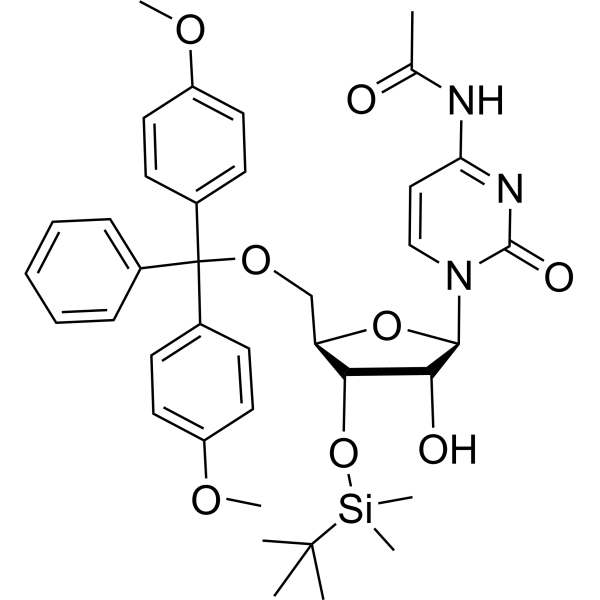 0 Images5'-O-DMT-3'-O-TBDMS-Ac-rC is a modified nucleoside and can be used to synthesize DNA or RNA.
-
Tempo-d18
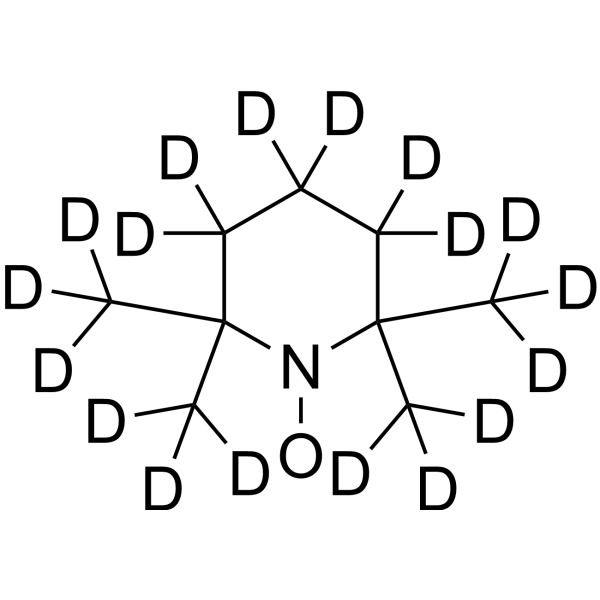 0 ImagesCat. No.: HY-W001187SCAS No.: 205679-68-1Tempo-d18 is the deuterium labeled Tempo. Tempo is a classic nitroxide radical and is a selective scavenger of ROS that dismutases superoxide in the catalytic cycle. Tempo induces DNA-strand breakage. Tempo can be used as an organocatalyst for the oxidation of primary alcohols to aldehydes. Tempo has mutagenic and antioxidant effects.
-
SR 4330
 0 ImagesCat. No.: HY-100044CAS No.: 20028-80-2Synonyms: 1,2,4-Benzotriazin-3-amine; Win 60109SR 4330 is a cytotoxic compound that targets hypoxic cells. The lower limits of quantification are 40 ng/mL and 20 ng/mL in mouse and human plasma.
-
Deoxycytidine triphosphate trisodium,100 mM Solution,PCR Grade
 0 ImagesSynonyms: dCTP trisodium,100 mM Solution,PCR Grade; 2′-Deoxycytidine-5′-triphosphate trisodium,100 mM Solution,PCR GradeDeoxycytidine triphosphate (dCTP; 2′-Deoxycytidine-5′-triphosphate) trisodium,100 mM Solution,PCR Grade is a nucleoside triphosphate that can be used for DNA synthesis. Deoxycytidine triphosphate trisodium,100 mM Solution,PCR Grade has many applications, such as real-time PCR, cDNA synthesis, and DNA sequencing. This product is supplied as an aqueous solution.
-
Adenine monohydrochloride hemihydrate
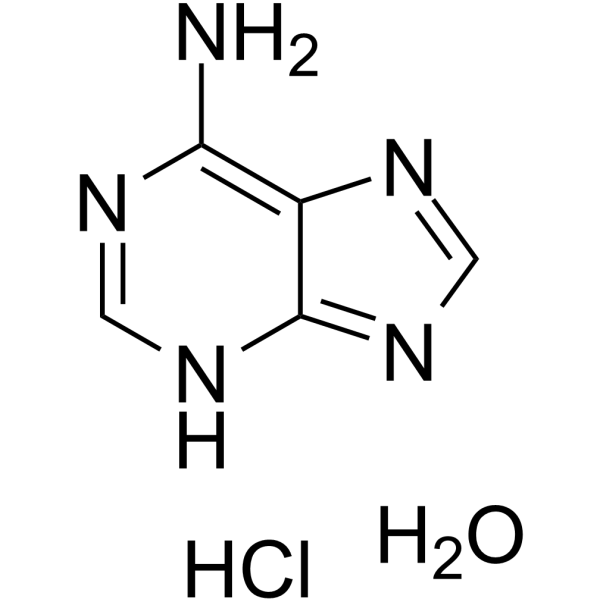 0 ImagesAdenine monohydrochloride hemihydrate is a hydrochloride derivative of Adenine. Adenine (6-Aminopurine), a purine, is one of the four nucleobases in the nucleic acid of DNA. Adenine acts as a chemical component of DNA and RNA. Adenine also plays an important role in biochemistry involved in cellular respiration, the form of both ATP and the cofactors (NAD and FAD), and protein synthesis.

-
5'-O-TBDMS-Bz-dA
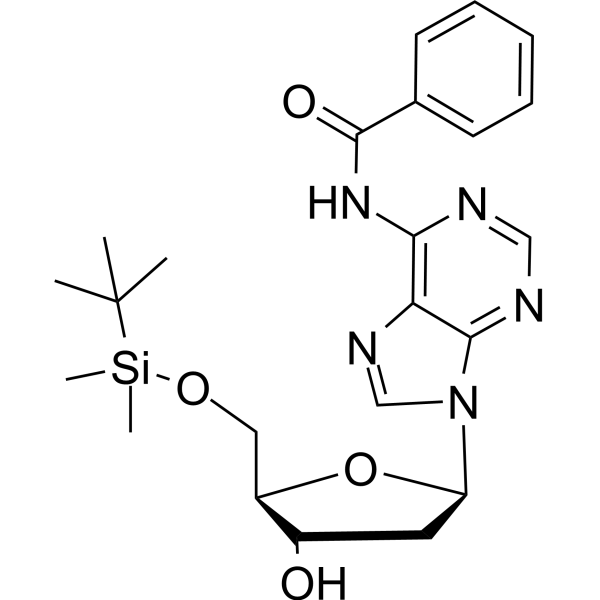 0 Images5'-O-TBDMS-Bz-dA is a nucleoside with protective and modification effects.
-
MKI-2
 0 ImagesCat. No.: HY-185310CAS No.: 438204-56-9MKI-2 is a selective MASTL inhibitor with an IC50 of 37.44 nM. MKI-2 induces mitotic catastrophe resulting from the modulation of the MASTL-PP2A axis in breast cancer cells. MKI-2 reduces phospho-ENSA, total, phospho-c-Myc levels. MKI-2 inhibts cancer cells proliferation, migration and induces DNA damage. MKI-2 inhibits germinal vesicle breakdown in mouse oocytes. MKI-2 can be used for the research of cancer, such as breast cancer.
-
aTAG 4531
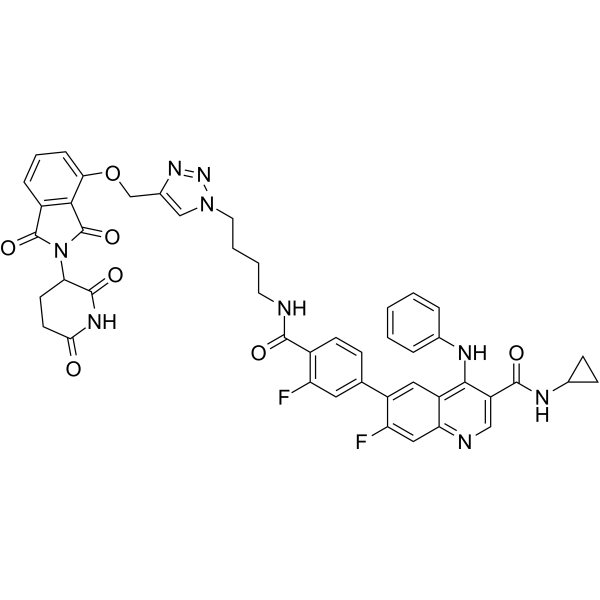 0 ImagesSynonyms: CFT-4531aTAG 4531 (CFT-4531) is a PROTAC-class degrader that induces the degradation of the MTH1/aTAG fusion protein by recruiting cereblon, with a DC50 of 0.28 nM in Jurkat cells. aTAG 4531 inhibits MTH1 enzymatic activity, with a Ki of 1.8 nM. aTAG 4531 rapidly, selectively and reversibly regulates SMART-CAR protein levels, CAR-mediated target cell killing and IL-2 release, and is applicable both in vitro and in vivo. aTAG 4531 can be used in studies of targeted protein degradation, target validation and CAR-T activity regulation.
-
Dihydromyricetin (Standard)
 0 ImagesSynonyms: Ampelopsin (Standard); Ampeloptin (Standard)Dihydromyricetin (Standard) is the analytical standard of Dihydromyricetin. This product is intended for research and analytical applications. Dihydromyricetin is a potent inhibitor with an IC50 of 48 μM on dihydropyrimidinase. Dihydromyricetin can activate autophagy through inhibiting mTOR signaling. Dihydromyricetin suppresses the formation of mTOR complexes (mTORC1/2). Dihydromyricetin is also a potent influenza RNA-dependent RNA polymerase inhibitor with an IC50 of 22 μM.
-
LNA-A(Bz) amidite
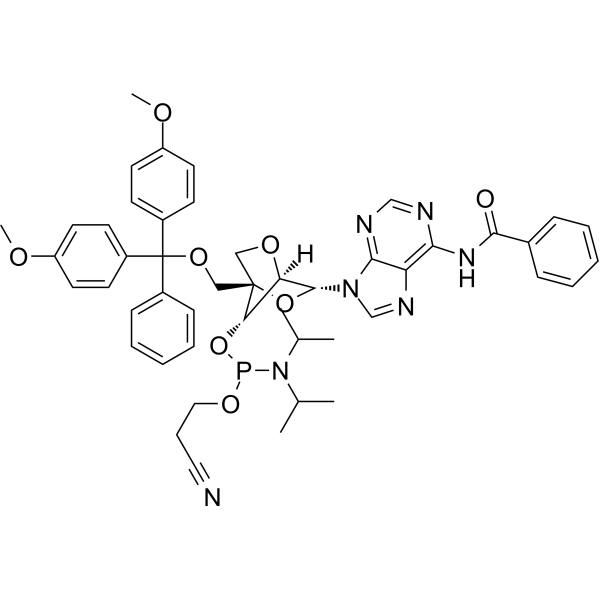 0 ImagesCat. No.: HY-W570887CAS No.: 206055-79-0LNA-A (Bz) amidite is a phosphoramidite monomer applicable for oligonucleotide synthesis, such as the synthesis of miniature LNA anti-miRNA-122 antisense oligonucleotides.
-
PfDHODH-IN-1
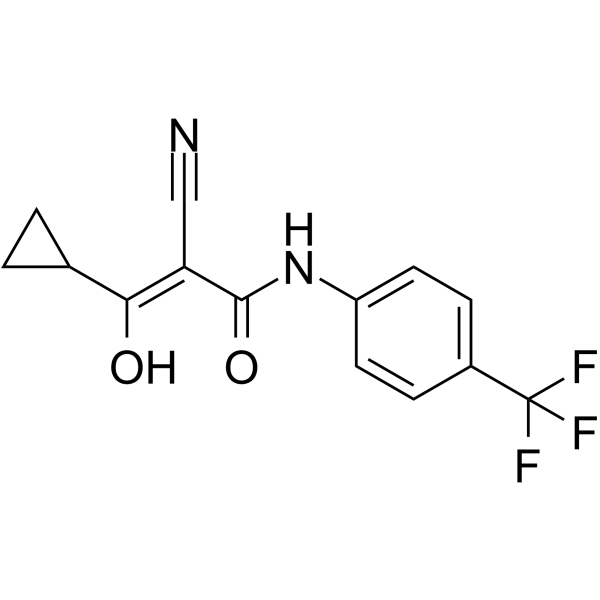 0 ImagesPfDHODH-IN-1 is an analogue of the active metabolite of Leflunomide. PfDHODH-IN-1 is a Plasmodium falciparum dihydroorotate dehydrogenase (PfDHODH) inhibitor. PfDHODH-IN-1 has antimalarial activity.
-
DHODH-IN-11
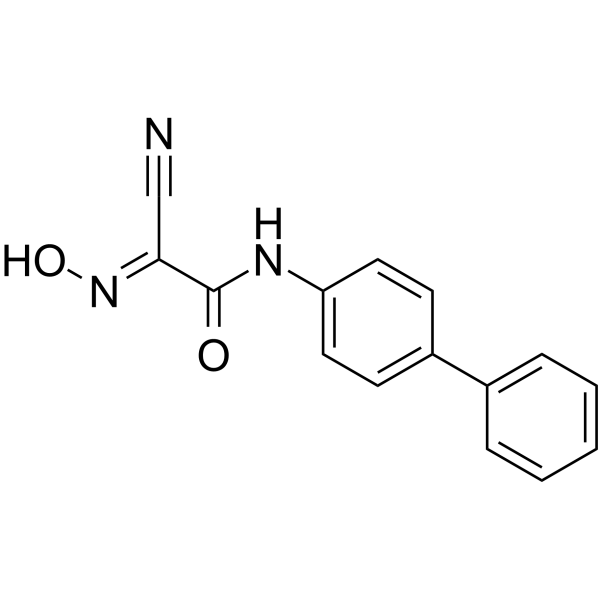 0 ImagesDHODH-IN-11 (Compound 14b) is a Leflunomide derivative and a weak dihydroorotate dehydrogenase (DHODH) inhibitor with a pKa of 5.03.
-
Cymoxanil
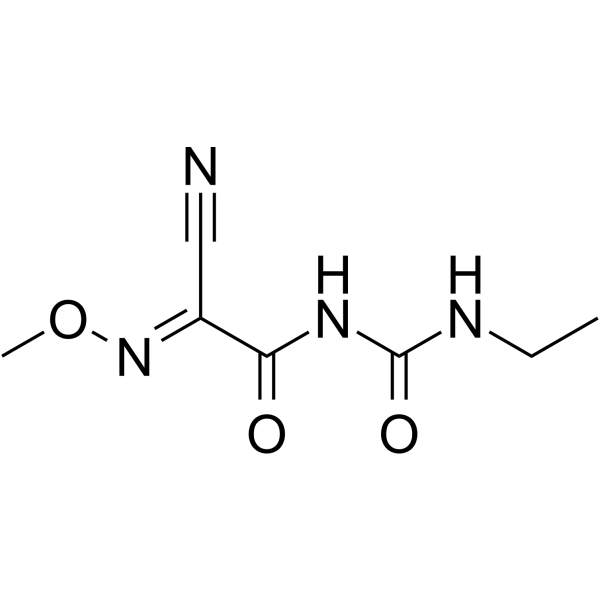 0 ImagesCymoxanil is a fungicidal cyanooxime against plant diseases caused by fungi belonging to the Perenosporales. Cymoxanil affects growth, DNA and RNA synthesis in Phytophthora.
-
Saccharin 1-methylimidazole
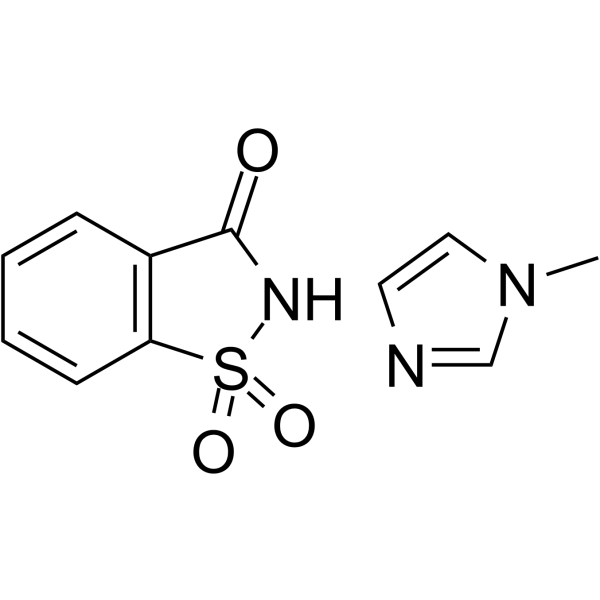 0 ImagesSaccharin 1-methylimidazole is an activator for DNA/RNA Synthesis.
-
Trimidox hydrochloride
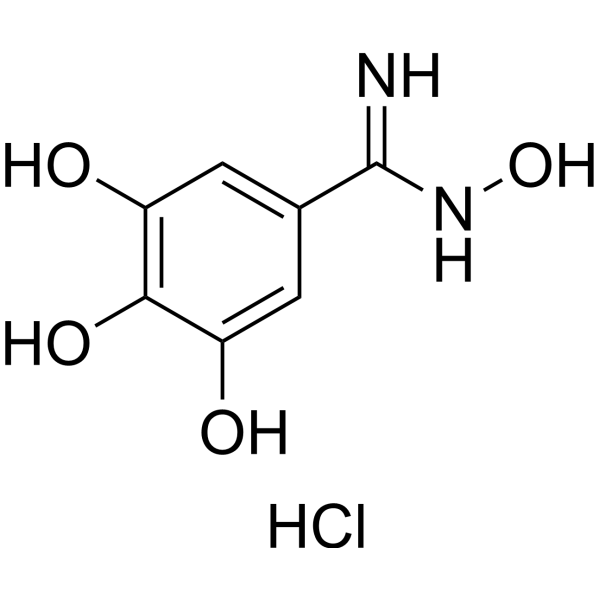 0 ImagesSynonyms: VF-233 hydrochlorideTrimidox hydrochloride (VF-233) is a ribonucleotide reductase inhibitor with antileukemic activities. Trimidox hydrochloride inhibits the growth of human promyelocytic leukemia HL-60 cells with an IC50 of 35 μM.




